 By Blaze Sky
A motor vehicle represents one of the most substantial financial investments most individuals make. Yet, many car owners overlook the continuous care required to maintain that investment over time. While modern automobiles are engineered with high levels of durability and advanced onboard technology, they still consist of thousands of mechanical, electrical, and hydraulic components operating under extreme heat, pressure, and constant friction.
Ignoring routine maintenance until a dashboard warning light flashes or a major mechanical system fails is a reactive strategy that often leads to costly repairs and compromised safety. Adhering to a consistent schedule of professional automotive servicing is the single most effective way to preserve long-term vehicle health, optimize performance, and ensure passenger safety.
Maximizing Mechanical Lifespan and Engine Health
The internal combustion engine, along with the transmission and drivetrain, relies on clean fluids and tightly calibrated components to operate smoothly. Skipping routine servicing allows minor wear to snowball into severe, irreversible internal damage.
Fluid Preservation and Friction Reduction
Engine oil, transmission fluid, coolant, and brake fluid deteriorate over time. Thermal stress breaks down their molecular structure, while dirt, metal shavings, and combustion byproducts contaminate them.
-
Engine Oil Maintenance: Fresh oil provides essential lubrication between fast-moving metallic parts like pistons, camshafts, and bearings. Over time, old oil turns into thick sludge, blocking narrow oil passages and causing metal-on-metal friction that degrades the engine.
-
Cooling System Protection: Engine coolant prevents overheating and resists internal corrosion inside the radiator and engine block. Servicing ensures the fluid maintains the proper chemical balance to manage extreme temperatures effectively.
-
Transmission Fluid Care: Routine transmission service removes metal filings and maintains hydraulic pressure, preventing gear slippage and transmission failure.
Filter Replacements and Air Intake Efficiency
Filters act as the primary defense mechanism against environmental contaminants. Oil filters trap suspended soot and debris, keeping the lubricant clean. Engine air filters stop dirt, sand, and leaves from entering the combustion chambers. Cabin air filters remove dust, pollen, and airborne pollutants from entering the passenger cabin. Replacing these filters during regular service appointments protects vital components from premature abrasion and maintains efficient engine airflow.
Enhancing Fuel Economy and Environmental Performance
Rising fuel costs make efficiency a top priority for drivers. A poorly maintained vehicle burns significantly more gas than one serviced according to manufacturer standards.
Restoring Optimal Combustion
When spark plugs erode, fuel injectors become clogged, or oxygen sensors drift out of calibration, the engine control unit struggles to maintain the correct air-to-fuel ratio. Incomplete combustion wastes fuel by sending unburned gasoline into the exhaust system. Servicing restores clean fuel atomization and strong ignition sparks, allowing the engine to extract maximum energy from every drop of fuel.
Reducing Harmful Exhaust Emissions
A properly serviced vehicle operates cleanly, minimizing toxic exhaust output. Regular maintenance keeps the catalytic converter, evaporative emission system, and exhaust gas recirculation valves functioning correctly. This not only protects the environment by lowering greenhouse gas output but also ensures the vehicle complies with state and local emissions inspection standards.
Uncovering Hidden Wear Before Major Failures Occur
One of the greatest advantages of professional car servicing is the multi-point inspection performed by qualified technicians. Many critical vehicle components degrade gradually, showing no obvious warning signs to the average driver until they fail completely.
Preventive Suspensions and Brake Checks
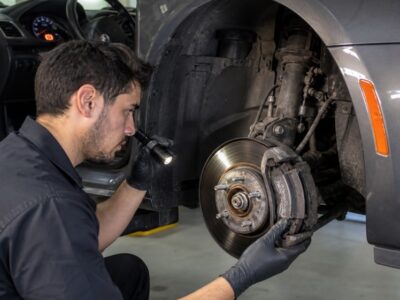
Brake pads, rotors, shock absorbers, tie rods, and ball joints endure relentless stress on every drive. During a service, technicians measure brake pad thickness, check hydraulic brake lines for weeping, and inspect suspension bushings for cracking. Identifying a thin brake pad early prevents it from grinding against and destroying an expensive brake rotor.
Hose and Drive Belt Integrity
Rubber components under the hood, such as serpentine belts, timing belts, and radiator hoses, age due to constant exposure to heat and oil fumes. A dry-rotted radiator hose can burst on the highway, causing sudden coolant loss and engine seizure within minutes. Routine inspections identify fraying, glazing, or micro-cracking in belts and hoses long before they snap under load.
Preserving Resale Value and Warranty Coverage
Vehicle ownership extends beyond daily driving; it eventually involves selling or trading in the car. The financial return realized at the end of ownership heavily depends on how well the vehicle was maintained throughout its operating life.
Stamped Service Records
A fully documented, continuous service history provides tangible proof to prospective buyers or dealership appraisers that the car was cared for properly. Vehicles with clear service records command significantly higher resale prices than identical models lacking proof of maintenance. Buyers pay a premium for peace of mind, knowing that the engine, transmission, and safety systems were serviced on time.
Factory Warranty Protection
New and certified pre-owned vehicles come with manufacturer warranty coverage. However, these warranties contain clear stipulations requiring the owner to perform routine maintenance at specified intervals. Failing to service the vehicle according to the manufacturer schedule can void warranty coverage, leaving the owner responsible for massive repair bills if a major component fails.
Ensuring Uncompromising Road Safety
Beyond economic factors and vehicle longevity, the primary reason to service a car regularly is safety. A vehicle is a heavy machine traveling at high speeds, and a mechanical failure can have severe consequences for passengers and surrounding motorists.
Regular servicing ensures that vital safety systems operate without flaw. Antilock braking systems, electronic stability controls, power steering assemblies, and tire tread conditions are evaluated to ensure they respond instantly in an emergency maneuver. Knowing that every major system has been inspected and verified instills confidence in the driver, making every journey safer and far less stressful.
Frequently Asked Questions
What is the difference between a minor service and a major service?
A minor service typically occurs every 5,000 to 7,500 miles and focuses on basic preventive care, including engine oil and filter changes, tire rotation, fluid top-offs, and a visual multi-point safety inspection. A major service occurs at larger intervals, such as every 30,000 or 60,000 miles, and includes extensive replacements such as spark plugs, fuel filters, cabin and air intake filters, transmission fluid flush, brake fluid renewal, and deep diagnostic scans.
Can driving habits affect how often a vehicle needs to be serviced?
Yes. Vehicles subjected to severe driving conditions require more frequent servicing. Severe conditions include frequent short trips under five miles, prolonged idling in heavy traffic, driving in extreme heat or freezing temperatures, towing trailers, or driving on dusty, unpaved roads. These activities accelerate fluid degradation and component wear, making shorter maintenance intervals necessary.
How does regular servicing help protect a vehicle battery?
During routine servicing, technicians inspect the battery terminals for corrosion, clean the connections, and test the cold-cranking capacity and voltage output. Catching an aging or weak battery during a shop visit prevents unexpected starting failures at home or on the road, while cleaning terminal corrosion ensures stable electrical voltage across all vehicle electronic modules.
Why is tire rotation included in standard vehicle servicing routines?
Tire rotation involves changing the physical position of the tires on the vehicle to ensure even tread wear across all four wheels. Front tires bear more weight and handle steering forces, causing them to wear faster than rear tires. Rotating tires during every oil change extends overall tire lifespan, improves traction, preserves balanced handling, and prevents premature tire replacement.
Is it acceptable to take a vehicle to an independent repair shop instead of a dealership for servicing?
Yes. Vehicle owners are legally allowed to have their cars serviced at qualified independent repair shops without voiding their manufacturer warranty, provided the work meets the manufacturer specifications and accurate service receipts are saved. Independent shops often offer competitive pricing while maintaining the same standards of care as franchised dealerships.
What are the risks of continuing to drive a car that is past its service due date?
Overdue servicing leads to degraded engine oil, which causes internal friction, oil sludge accumulation, and accelerated engine wear. Clogged filters restrict air and fuel flow, reducing power and burning extra gas. Neglecting inspections allows minor issues, such as worn brake pads or deteriorating coolant hoses, to progress into catastrophic mechanical failures, leaving the vehicle unsafe to operate.
Does a hybrid or electric vehicle require regular servicing similar to a gas-powered car?
Yes, although the service requirements differ. Electric vehicles do not require traditional engine oil changes, spark plug replacements, or exhaust repairs, but they still require regular servicing for braking systems, suspension components, cabin air filters, steering gear, and tire rotations. Additionally, electric and hybrid vehicles require specialized inspections of high-voltage cooling loops, thermal management fluids, and battery health diagnostics.
What is your reaction?
Excited
0
Happy
0
In Love
0
Not Sure
0
Silly
0