 By Blaze Sky
The automotive repair industry is undergoing its most profound transformation since the invention of the assembly line. For generations, vehicle maintenance relied primarily on mechanical intuition, physical wrenches, grease-stained service manuals, and trial-and-error troubleshooting. Today, modern automobiles are less like pure mechanical machines and more like sophisticated, rolling computers wrapped in steel and aluminum.
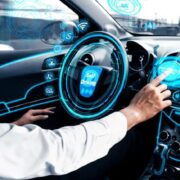
With the rapid rise of software-defined vehicles, high-voltage electric powertrains, integrated sensor networks, and cloud connectivity, the traditional garage is giving way to high-tech diagnostic centers. Advanced technological innovations are streamlining repairs, reducing guesswork, enhancing road safety, and completely reshaping how drivers interact with auto mechanics.
Artificial Intelligence and Telematics Drive Predictive Diagnostics
One of the most revolutionary shifts in modern auto repair is the movement from reactive servicing to proactive, predictive maintenance. Historically, drivers took their vehicles to a shop only after a part failed or a check engine light illuminated on the dashboard. Modern technology has turned this reactive model upside down.
Connected Telematics and Real-Time Data Streaming
Contemporary vehicles are equipped with factory-embedded telematics systems that continuously monitor engine performance, brake wear, battery health, and fluid temperatures. This data is transmitted wirelessly to cloud databases managed by manufacturers and service networks. Service centers can analyze live telemetry streams to identify microscopic performance anomalies long before they cause a mechanical breakdown.
Machine Learning Algorithms
Artificial intelligence algorithms process millions of data points across entire vehicle fleets. By comparing a specific car’s live operational telemetry against historical failure patterns, AI tools can predict precisely when a fuel pump, alternator, or turbocharger is likely to fail. Drivers receive automated service notifications on their smartphones, allowing them to schedule targeted repairs before experiencing a dangerous highway breakdown.
Augmented Reality and Smart Tools in the Bay
Inside the repair bay, technicians are trading paper manuals and basic scan tools for spatial computing, augmented reality headsets, and intelligent diagnostic equipment.
Augmented Reality Repair Guidance
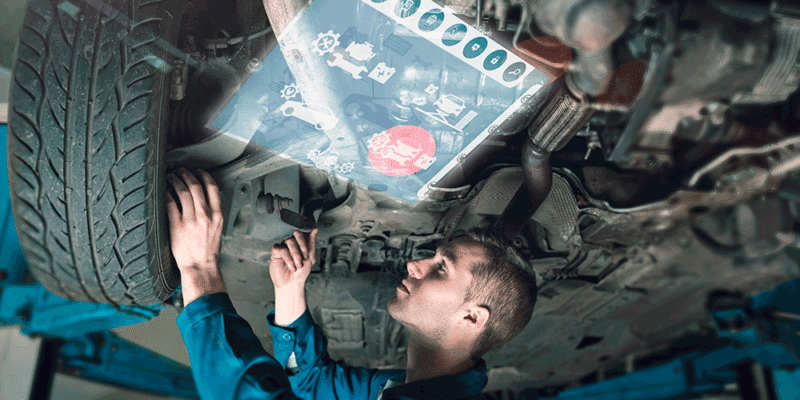
Complex vehicle architectures, especially inside hybrid and electric vehicles, make manual troubleshooting time-consuming. Using augmented reality glasses or tablet displays, technicians can overlay 3D digital schematics directly onto the physical vehicle components they are inspecting.
-
Wiring Harness Mapping: AR interfaces illuminate complex wiring looms behind dashboard assemblies, highlighting exact circuit paths and grounding points.
-
Component Identification: Visual computer systems instantly recognize engine parts and highlight damaged or worn components in color-coded overlays.
-
Step-by-Step Guidance: Master technicians can remotely project real-time assembly instructions into a junior technician’s field of view, speeding up complex repairs.
Precision Smart Tools
Modern garages utilize wireless, torque-controlled tools that communicate directly with shop management software. When a technician installs a critical engine component, the smart wrench automatically applies the exact manufacturer-specified torque setting, logging the completion data into the digital vehicle record to eliminate human error.
The Software Revolution: Over-the-Air Updates and Calibrations
As vehicles become increasingly software-driven, many traditional mechanical repairs are being replaced or augmented by digital code updates and delicate sensor calibrations.
Over-the-Air Repairs
Wireless software capability allows vehicle manufacturers to fix minor operational bugs, adjust engine tuning, optimize battery thermal management, and update safety suites remotely. Rather than forcing a driver to drop off their vehicle at a service shop for a minor recall or computer patch, updates download and install automatically overnight in the owner’s driveway.
Calibration of Driver Assistance Systems
Modern vehicles feature Advanced Driver Assistance Systems, including automatic emergency braking, lane-keeping assistance, adaptive cruise control, and blind-spot radar. When a vehicle undergoes routine repairs like windshield replacement, bumper repair, or wheel alignment, these delicate cameras and radar sensors must be recalibrated.
Specialized digital calibration rigs use lasers, radar targets, and computerized positioning boards to align safety sensors to sub-millimeter tolerances. Without this high-tech calibration, essential safety systems could misjudge stopping distances or fail to detect lane boundaries.
Digital Customer Experiences and Operational Transparency
Technology has transformed the physical repair process, but it has had an equally dramatic impact on customer service and operational transparency.
Video Diagnostics and Digital Inspection Reports
The days of receiving a vague, confusing phone call from a mechanic explaining complex repairs are ending. Modern repair centers utilize digital multipoint inspection tools. Technicians capture high-definition photos and short video clips during underbody inspections, showing customers worn brake pads, cracked belts, or leaking fluid seals directly on their smartphones. This visual evidence removes suspicion and builds instant trust between drivers and service centers.
Frictionless Digital Interactions
Digital shop management systems streamline every point of customer interaction:
-
Online Scheduling: Vehicle owners can view real-time shop availability and book appointments online within seconds.
-
Automated Status Tracking: Text messaging platforms deliver automated updates as a vehicle moves from intake, to diagnostic testing, to final quality checks.
-
Mobile Approvals and Digital Payments: Customers review itemized estimates, approve specific repair recommendations, and pay their bills securely via mobile payment platforms from their phones.
Specialized Servicing for Electric and High-Voltage Powertrains
The rapid transition toward electric vehicles has required repair shops to adopt specialized equipment, advanced insulation tools, and digital battery health diagnostics.
Repairing an electric vehicle requires technicians to analyze high-voltage battery modules, thermal cooling loops, and electric drive units. Specialized software platforms allow technicians to balance individual battery cell voltages, evaluate degradation rates, and perform non-invasive diagnostic checks without disassembling the sealed battery pack. Advanced digital safety protocols ensure high-voltage systems are safely isolated before physical maintenance begins.
The Future: AI-Driven Auto Repair Excellence
Technology is elevated from an optional convenience to the absolute core of the modern auto repair industry. As software continues to define how vehicles operate, the technicians who keep them running must blend traditional mechanical skill with computer engineering, electronic diagnostics, and spatial computing. For drivers, this technological evolution delivers safer vehicles, shorter shop turnaround times, complete pricing transparency, and far fewer unexpected breakdowns on the road.
Frequently Asked Questions
Will over-the-air updates completely eliminate the need to visit physical repair shops?
No. While over-the-air software updates can resolve software glitches, adjust computer calibrations, and optimize battery management, they cannot replace physical wear items. Mechanical components like tires, brake pads, suspension bushings, steering joints, and wiper blades will always require physical inspection and manual replacement by trained technicians.
How do modern diagnostic scans differ from the check engine light checks of the past?
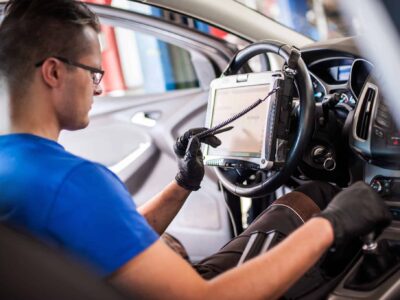
Basic OBD-II code readers only provided generic fault codes pointing to broad system areas. Modern diagnostic platforms connect directly to vehicle network architectures, running multi-system diagnostic tests that analyze live sensor inputs, freeze-frame data, and historic computer logs. This level of detail pinpointing the exact root cause of an issue saves hours of physical troubleshooting labor.
Why are repairs for vehicles with driver assistance features more expensive than older cars?
Vehicles equipped with advanced safety features house delicate radar modules, ultrasonic sensors, and cameras behind bumpers, grilles, and windshields. Replacing or repairing any adjacent component requires specialized digital calibration equipment and labor-intensive setup procedures to ensure the safety systems function accurately.
Do independent repair shops have access to the same technology as franchised dealerships?
Yes. While dealerships often receive factory tools first, independent repair shops invest heavily in multi-brand professional diagnostic software, aftermarket calibration equipment, and third-party telematics platforms. Right-to-repair laws and standardized digital tool networks help ensure independent shops maintain access to the diagnostic data required to service modern vehicles.
What is digital vehicle inspection, and how does it benefit the vehicle owner?
Digital vehicle inspection is a process where technicians document a car’s condition using tablets, capturing high-resolution photos and short videos of worn or damaged components. These visual reports are sent directly to the owner via text or email, allowing them to see the exact condition of their vehicle parts and make informed decisions without relying solely on verbal descriptions.
How does artificial intelligence help technicians diagnose complex car problems faster?
AI diagnostic platforms analyze millions of past repair records across thousands of similar vehicles. When a technician inputs a specific set of symptom codes, the AI tool identifies the most statistically likely root cause, suggests a prioritized diagnostic path, and lists the exact parts and tools required, drastically reducing diagnostic time.
Can telematics data predict a car breakdown before it happens?
Yes. Telematics systems continuously monitor real-time operational parameters such as battery voltage drops, starter current draw, fuel pressure fluctuations, and cooling system efficiency. When these metrics drift outside normal operating thresholds, machine learning models flag an impending component failure, allowing the driver to fix the part before getting stranded.
What is your reaction?
Excited
0
Happy
0
In Love
0
Not Sure
0
Silly
0