 By Blaze Sky
A repair workshop can only perform well when its equipment supports the way technicians actually work. Choosing an automotive repair equipment provider should involve looking at the full repair environment, from lifting and measuring to alignment, pulling, anchoring, calibration preparation and technician training.
Equipment Should Reduce Friction In The Workshop
Every workshop has pressure points. Vehicles wait for inspection, technicians share equipment, structural repairs take longer than expected, or jobs move slowly because setup time is too high. Good equipment should reduce these problems rather than add another layer of complexity.
A provider should be assessed on how their equipment fits into the real movement of vehicles through the facility. If a system improves accuracy but takes too long to set up, it may not be used as often as it should be. If equipment is flexible but lacks clear reference points, technicians may still struggle to work consistently.
The best workshop setups make the correct process easier to follow. They help technicians move from assessment to repair with fewer delays and less uncertainty. That has a direct effect on cycle time, repair quality and workshop capacity.
Modern Repairs Need More Than General Tools
Vehicle repair has become more technical. Advanced materials, safety systems, tighter tolerances and manufacturer procedures mean workshops need equipment designed for controlled, repeatable work. General tools may still have a place, but they are not enough for structural or precision-led repairs.
For example, a repair involving vehicle alignment or structural distortion needs accurate measuring and anchoring. A technician must be able to understand where the vehicle sits compared with specification before deciding how to correct it. Without the right equipment, the repair can become dependent on experience alone, which is risky when tolerances are tight.
A capable equipment provider should understand these pressures. They should help workshops choose tools and systems that support proper diagnosis and repair, not simply sell products individually.
Training Helps Turn Equipment Into Capability
An equipment purchase does not automatically create a skilled process. Technicians need to understand how to use the systems properly, how to interpret measurements and how to apply equipment safely during repair. Without training, even advanced equipment can be underused.
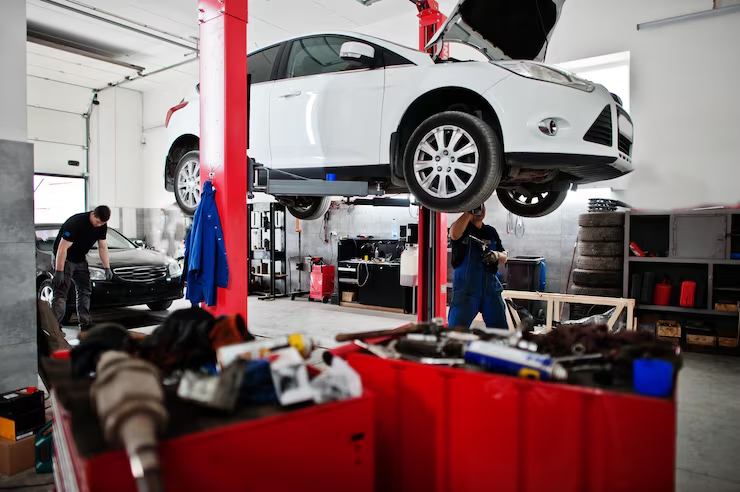
Training also helps create consistency across the team. If one technician uses a system one way and another uses it differently, results may vary. A structured approach makes it easier for the workshop to maintain standards even when different people are working on different vehicles.
For managers, this is important because equipment should support the business, not depend entirely on one experienced individual. The more knowledge is shared across the team, the more resilient the workshop becomes.
The Provider Relationship Should Continue After Installation
A good equipment provider should remain useful after the initial sale. Workshops may need spare parts, updates, fixtures, technical advice or guidance as repair demands change. If support is weak, equipment can become harder to maintain and less valuable over time.
Before choosing a provider, it is worth asking how support works. Can replacement items be sourced? Is technical help available? Is training offered? Can the provider help the workshop adapt as new repair requirements appear?
The right provider helps a workshop build capability over time. By choosing equipment and support that match the repair process, a business can improve accuracy, reduce wasted time and give technicians better tools to do the job properly.