
 By Blaze Sky
Long-distance road travel presents a unique set of demands on a motor vehicle. Unlike short daily commutes through city streets, extended highway trips expose automobiles to sustained high speeds, prolonged mechanical stress, wide temperature fluctuations, and varied road conditions. A minor mechanical flaw that causes little trouble during a brief trip to a local grocery store can quickly escalate into a dangerous breakdown when driving across state lines. Thorough vehicle maintenance prior to departure is the single most effective way to ensure passenger safety, preserve mechanical reliability, and prevent stressful highway emergencies.
Preparing a vehicle for long-distance travel requires a systematic evaluation of its primary operating systems. Understanding how routine maintenance supports safer highway driving empowers vehicle owners to take control of their journey before ever turning the ignition key.
Optimizing the Tires and Suspension for Highway Dynamics
Tires and suspension components form the foundation of vehicle handling, directional stability, and stopping power. On long highway stretches, tires rotate millions of times while supporting the weight of passengers, luggage, and fuel. Maintaining these components ensures maximum control during high-speed maneuvers.
Pressure Management and Tread Health
Tire pressure fluctuates with ambient temperature and continuous highway driving. Underinflated tires experience excessive sidewall flex, which generates intense internal heat. Over time, this heat buildup can cause tread separation or catastrophic tire blowouts at high speeds. Conversely, overinflated tires reduce the contact patch with the road, leading to compromised traction and harsh ride quality.
-
Cold Inflation Pressure: Always check tire pressure in the morning before driving the vehicle, matching the manufacturer metrics listed on the driver door jamb sticker.
-
Tread Depth Verification: Adequate tread depth is vital for evacuating water on wet highways to prevent hydroplaning. Using a tread gauge or the traditional penny test confirms whether the tires can handle unexpected rainstorms.
-
Spare Tire Readiness: A spare tire is useless if it is flat. Checking the pressure and rubber condition of the spare tire, alongside the jack and lug wrench, is an essential pre-trip step.
Alignment and Suspension Integrity
High-speed highway travel amplifies any underlying steering or suspension imbalance. Worn shock absorbers, loose tie rod ends, or unbalanced wheels cause steering wheel vibrations, vehicle pulling, and uneven tire wear. Proper wheel alignment and balanced tires ensure smooth handling, reduce driver fatigue during long hours at the wheel, and keep the vehicle firmly planted during sudden steering corrections.
Safeguarding Engine Reliability and Thermal Control
Prolonged highway driving forces the engine to operate under continuous load for hours at a time. The engine cooling system and internal lubrication must perform flawlessly to prevent thermal breakdown and severe mechanical damage.
Fluid Quality and Level Checks
Engine fluids are the lifeblood of a vehicle. Over time, fluids absorb heat, moisture, and particulate contaminants, diminishing their protective qualities.
-
Engine Oil: Fresh engine oil minimizes friction among moving metallic parts, regulates internal engine temperatures, and prevents sludge accumulation. Replacing old oil and installing a fresh oil filter before a major road trip guarantees optimal lubrication under sustained high revolutions per minute.
-
Engine Coolant: The cooling system manages intense thermal energy. Checking the coolant level and verifying that the radiator hoses are free of soft spots, cracks, or leaks prevents high-temperature engine overheating far from home.
-
Transmission and Brake Fluids: Transmission fluid allows smooth gear shifts and prevents transmission overheating during long uphill mountain climbs. Fresh brake fluid maintains a high boiling point, ensuring crisp pedal feel and full hydraulic force during repeated heavy braking.
Belts, Hoses, and Air Intake Filters
Engine drive belts and rubber coolant hoses undergo severe thermal stress. A worn serpentine belt can snap without warning, instantly disabling the alternator, water pump, and power steering system. Inspecting drive belts for surface cracks or fraying before a trip avoids unexpected roadside stranding. Additionally, replacing a clogged engine air filter ensures proper airflow to the combustion chambers, optimizing fuel economy and maintaining engine power when passing slower vehicles.
Ensuring Stopping Power and High-Visibility Command
Safety during long-distance travel relies heavily on the ability to anticipate hazards, stop quickly, and remain visible to surrounding motorists in all weather conditions.
Complete Braking System Diagnostics
High-speed highway driving requires significantly longer stopping distances than local driving. Heavy traffic, sudden construction slowdowns, or unexpected debris on the road demand maximum brake responsiveness.
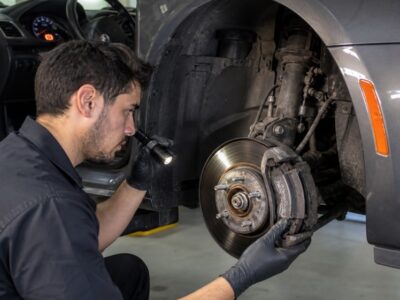
Brake pads should be inspected to ensure sufficient friction material remains. Pads that are worn thin transfer excessive heat to the brake rotors, leading to thermal warping, pedal pulsation, and reduced stopping force. Inspecting brake lines for corrosion or fluid weeping guarantees that hydraulic pressure remains strong when emergency braking is required.
Lighting, Glass, and Driver Visibility
Extended trips often involve driving through heavy rain, fog, dense night darkness, or sudden glare. Clear visibility is essential for maintaining situational awareness.
-
Windshield Wiper Blades: Aged rubber wiper blades leave streaks, chatter across the glass, or fail to clear heavy downpours, severely impairing the driver view. Installing fresh, high-performance wiper blades before a long trip ensures clear vision during sudden summer storms or winter sleet.
-
Lighting Systems: Functional headlights, taillights, turn signals, and hazard lights are crucial for night driving and communicating intentions to other drivers. Polishing oxidized, cloudy headlight lenses restores full light output for safer night navigation.
-
Glass Condition: Small stone chips on a windshield can rapidly expand into large structural cracks when subjected to highway wind pressure and temperature shifts. Repairing minor glass chips before setting out preserves windshield strength.
Electrical Stability and Battery Performance
Modern vehicles rely extensively on complex electronic systems, including advanced safety suites, global positioning navigation, anti-lock brakes, and climate controls. All of these systems place a heavy electrical demand on the car battery and alternator.
Automotive batteries generally have a operational lifespan of three to five years. High ambient temperatures degrade internal battery chemistry, while cold weather reduces starting power. Testing the battery voltage and cold-cranking amps before a long road trip ensures the engine will start reliably at every rest stop along the way. Cleaning corrosion off the battery terminals guarantees a stable electrical connection, preventing random electronic glitches or sudden starting failures in unfamiliar locations.
The Mental Peace of Mind Delivered by Maintenance
Beyond physical safety and mechanical protection, proactive vehicle maintenance provides invaluable mental reassurance. Driver anxiety regarding mechanical reliability leads to distraction and fatigue, both of which impair reaction times on the road. Knowing that the vehicle has been thoroughly inspected, serviced, and prepared by a qualified technician allows the driver to focus entirely on the road ahead, passenger comfort, and enjoying the journey. Investing time in routine maintenance before departure converts potential roadside emergencies into smooth, safe, and memorable travel experiences.
Frequently Asked Questions
How far in advance of a long trip should a vehicle inspection be performed?
It is best to have a vehicle inspected roughly one to two weeks before setting out on a long trip. Performing checks in advance provides ample time to address any discovered mechanical issues, order necessary replacement parts, and test drive the vehicle after repairs to ensure everything functions properly before departure.
Is it necessary to change the engine oil before a road trip if the service interval is not fully reached?
If the current engine oil is within one thousand miles of its recommended change interval, it is wise to replace the oil and filter before leaving. Long-distance travel subjects the engine to prolonged load and heat, and starting the journey with fresh, clean oil ensures maximum lubrication and engine protection throughout the trip.
What essential maintenance items should be kept inside the car during a long-distance trip?
Drivers should carry a tire pressure gauge, a portable tire inflator, a set of jumper cables or a lithium-ion jump starter pack, a flash light, extra windshield washer fluid, a basic tool kit, and a fully inflated spare tire with a functional jack and lug wrench. Carrying an emergency roadside kit adds an extra layer of safety.
How does proper tire inflation impact fuel expenses on extended highway trips?
Driving on underinflated tires increases rolling resistance between the rubber and the road surface, forcing the engine to burn more fuel to maintain highway speeds. Maintaining correct tire pressures minimizes rolling resistance, which can improve overall fuel economy by up to three percent and save noticeable money over thousands of highway miles.
Why do vehicle batteries often fail unexpectedly during long summer road trips?
While winter cold drains starting power, summer heat is actually more destructive to internal battery components. High ambient heat accelerates battery fluid evaporation and internal plate corrosion. When subjected to long hours of engine bay heat during a summer drive, a weakened battery can suffer sudden internal failure without prior warning.
What should a driver do if a dashboard warning light illuminates while driving on the highway?
If a amber warning light appears, such as a check engine light, the driver should monitor vehicle performance and seek a safe exit or service station at the next opportunity. However, if a red warning light turns on or flashes, such as oil pressure or engine temperature alerts, the driver should safely pull off the highway immediately, turn off the engine, and contact roadside assistance to prevent catastrophic engine damage.
Can driving on worn shock absorbers increase driver fatigue on long trips?
Yes. Worn shock absorbers fail to dampen road impacts and vehicle body roll effectively, causing continuous subtle bouncing, swaying, and steering instability. The driver must constantly make minor steering adjustments to keep the vehicle centered in the lane, leading to increased physical tension, muscular strain, and faster mental fatigue over several hours of driving.
What is your reaction?
Excited
0
Happy
0
In Love
0
Not Sure
0
Silly
0